TikTok Events API: Implementing Events That Actually Fire
By Samarth Analytics · Published · Updated · Conversion Tracking · 12 min read
Summary: A practical implementation guide for TikTok Events API that focuses on real-world reliability rather than theoretical setup. This article explains why many integrations fail silently, how to improve event match quality, and how to correctly implement identifiers, hashing, server-side forwarding via sGTM, and deduplication with the TikTok Pixel.
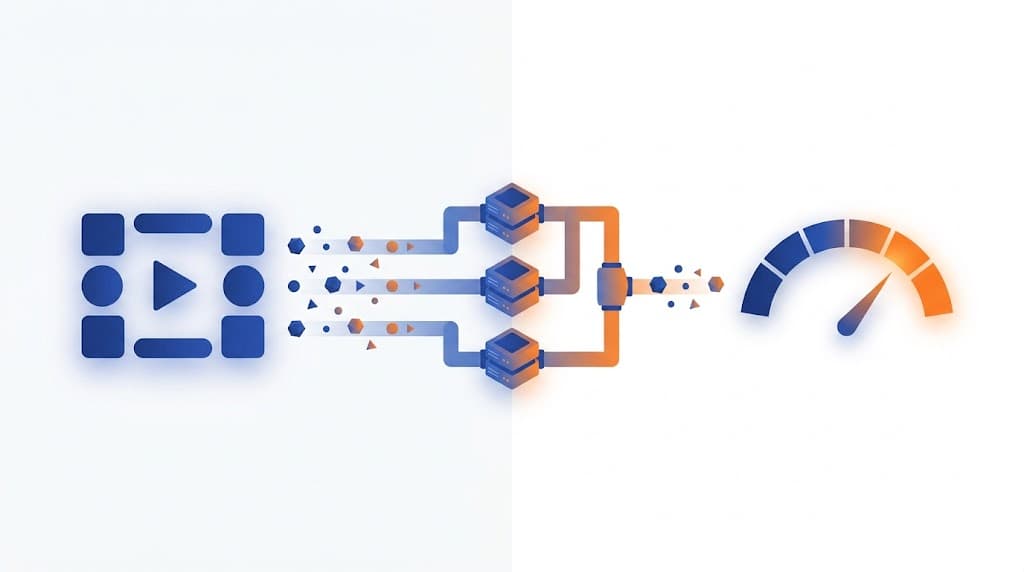
WHY TIKTOK MATCH QUALITY IS HARDER THAN META’S
On paper, TikTok Events API and Meta’s Conversions API look similar. Both allow server-side event tracking, both rely on hashed identifiers, and both aim to improve attribution reliability.
In practice, TikTok is significantly more sensitive to data quality.
The core difference is match tolerance:
Meta can often infer matches with partial signals TikTok requires stricter identifier alignment to attribute events correctly
This leads to a common issue:
Events are successfully accepted by the API but never matched to a user.
From the outside, everything looks correct. In reality, attribution silently fails.
This is why many implementations appear “working” but underperform in reporting.
EVENT SET TO IMPLEMENT FIRST
Not all events should be implemented at once. TikTok’s system performs better when you prioritize high-signal conversion events first.
The recommended initial event set includes:
PageView (baseline tracking) ViewContent (product or key page engagement) AddToCart (intent signal) InitiateCheckout (high intent signal) Purchase (primary conversion event)
Why this order matters:
It allows TikTok’s optimization model to learn progressively It improves match quality calibration over time It reduces noise in early-stage attribution training
Starting with too many low-quality events dilutes signal strength and reduces optimization performance.
IDENTIFIER REQUIREMENTS AND HASHING
TikTok Events API relies heavily on deterministic user matching signals.
Key identifiers include:
Email (hashed using SHA-256) Phone number (hashed and normalized) IP address User agent External click IDs where available
Critical implementation rules:
All PII must be normalized before hashing Hashing must follow SHA-256 standards exactly Inconsistent formatting (spaces, casing, country codes) breaks matching Multiple identifiers improve match probability significantly
Common failure point:
Teams hash data correctly but fail to normalize inputs consistently, resulting in mismatched identifiers.
This is one of the primary causes of low match quality scores.
SERVER-SIDE FORWARDING VIA sGTM
Server-side Google Tag Manager (sGTM) is the most reliable way to implement TikTok Events API at scale.
Benefits:
Centralized event control Consistent data formatting Reduced dependency on browser execution Improved resilience against ad blockers and privacy restrictions
Typical flow:
Client → sGTM → TikTok Events API
Inside sGTM:
Events are received from the browser Identifiers are enriched or normalized Payload is formatted for TikTok schema Events are forwarded server-to-server
This architecture reduces variability in event structure and improves match consistency across sessions and devices.
DEDUP WITH THE PIXEL
If you are running both the TikTok Pixel and Events API simultaneously, deduplication is required to avoid double-counting.
TikTok uses an event_id-based deduplication mechanism.
Implementation requirements:
Each event must include a unique event_id The same event_id must be sent from both Pixel and API Timing between events must be consistent (near real-time) Event parameters must match exactly across both sources
If deduplication fails:
Events may be double-counted Attribution becomes inflated Optimization algorithms receive corrupted signals
Proper deduplication is essential for reliable performance data.
CHECKING MATCH QUALITY IN EVENTS MANAGER
TikTok provides a match quality score inside Events Manager, but it is often misunderstood.
What it reflects:
Strength of identifier matching Completeness of user data Likelihood of attributing events to real users
What it does NOT reflect:
Event volume Pixel firing success API acceptance status
A common mistake is assuming “event received” means “event matched.”
Instead, you should monitor:
Match rate per event type Identifier completeness score Breakdown of matched vs unmatched events
Low match quality typically indicates identifier or normalization issues-not API failure.
DEBUGGING THE SILENT-FAIL PATTERN
The most dangerous failure mode in TikTok Events API is silent failure.
Characteristics:
Events are successfully sent API returns success responses No obvious error logs appear Attribution data remains flat or inconsistent
Common root causes:
Missing or weak identifiers Improper hashing or normalization Incorrect event schema mapping Over-reliance on single identifier (e.g., email only) Pixel/API mismatches in event structure
Debugging approach:
Validate raw payloads in server logs Compare Pixel vs API event structures Check identifier completeness per event Test with known user data for validation
Silent failures are not API issues-they are data quality issues disguised as successful integrations.
FINAL THOUGHTS
TikTok Events API implementation is not difficult at the surface level, but it is highly sensitive to data quality, structure, and identity resolution.
Most implementation failures are not visible errors-they are silent mismatches between sent events and attributed users.
A reliable setup depends on three core principles: consistent identifiers, strict normalization, and server-side control through systems like sGTM. When these are correctly implemented, TikTok’s optimization and attribution systems become significantly more stable and actionable.
Topics: TikTok Pixel, TikTok Events API, event match quality, server-side tracking, marketing attribution, sGTM integration, conversion tracking
More articles on the Samarth Analytics blog · Markdown version of this article