The Complete Guide to Server-Side GTM in 2025: When It’s Worth the Setup Cost
By Samarth Analytics · Published · Updated · Server-Side Tracking · 12 min read
Summary: A decision-focused guide to server-side Google Tag Manager (sGTM) in 2025. It explains what it does, when businesses should migrate, hosting choices, migration steps, hidden risks, and ROI evaluation. The goal is to help teams decide whether the implementation cost is justified by measurable tracking and performance gains.
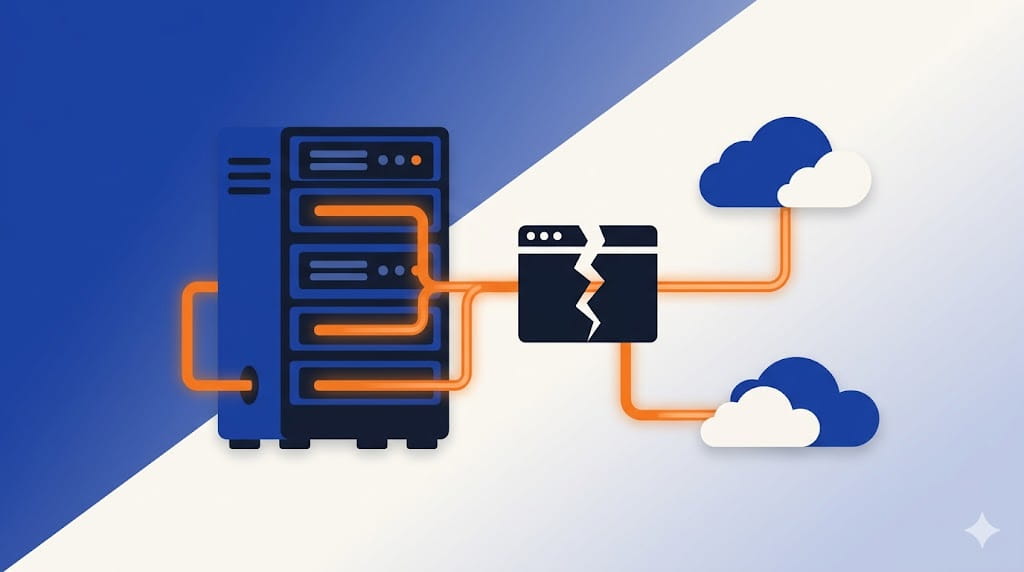
WHAT SERVER-SIDE GTM ACTUALLY DOES
Server-side Google Tag Manager (sGTM) is a modern tracking architecture where data collection moves from the browser to a dedicated server environment. Instead of firing tags directly from the user’s device, events are first processed on a server container before being forwarded to analytics and marketing platforms.
This approach fundamentally changes how tracking works. In client-side tracking, scripts run in the browser, which exposes data to ad blockers, cookie restrictions, and performance issues. Server-side GTM reduces this dependency by acting as a controlled middle layer.
Core functions include:
Processing event data on a secure server Filtering or modifying user data before sharing Reducing browser script load Improving tracking reliability across platforms
In 2025, with stricter privacy laws and reduced third-party cookie reliability, sGTM is increasingly used as a long-term data infrastructure solution rather than an optional upgrade.
THREE BUSINESS SIGNALS THAT JUSTIFY MIGRATION
Server-side GTM is not necessary for every business. However, there are clear business signals that indicate when the migration starts producing measurable ROI.
-
High Paid Media Spend When businesses scale paid campaigns across Google Ads, Meta Ads, or TikTok Ads, tracking accuracy directly affects revenue. Even small data loss can distort attribution models and bidding optimization. sGTM helps recover missing conversions by improving event capture accuracy.
-
Data Privacy and Compliance Pressure Industries handling sensitive data or operating under GDPR and similar regulations require stricter control over what data is shared. Server-side tracking allows filtering of personal identifiers before data reaches third-party platforms, reducing compliance risk.
-
Declining Tracking Accuracy Due to Browser Restrictions Ad blockers, cookie restrictions, and iOS privacy updates reduce the reliability of client-side tracking. If conversion data starts diverging from actual sales performance, server-side GTM becomes a corrective infrastructure layer.
If at least two of these conditions are present, migration typically becomes financially justified.
HOSTING OPTIONS COMPARED (STAPE, CLOUD RUN, SELF-MANAGED)
Choosing the right infrastructure is critical because it affects scalability, cost, and maintenance overhead.
Stape (Managed Solution) Stape provides a ready-to-use server-side GTM hosting environment. It reduces setup complexity and is ideal for marketers or small technical teams. It offers fast deployment but comes with recurring subscription costs.
Google Cloud Run Cloud Run is a flexible, scalable serverless environment. It allows pay-as-you-go pricing and integrates well with Google Cloud services. It requires more technical knowledge but offers strong cost efficiency at scale.
Self-Managed Hosting This option gives full infrastructure control but requires DevOps expertise. Teams must handle scaling, security, and monitoring manually. It is typically used by large organizations with internal engineering teams.
Summary comparison:
Stape: easiest setup, higher monthly cost Cloud Run: scalable and cost-efficient with moderate complexity Self-managed: full control but high operational overhead
MIGRATION CHECKLIST FROM CLIENT-SIDE GTM
Migrating to server-side GTM requires a structured approach to avoid data loss and tracking inconsistencies.
Step-by-step migration process:
Audit current GTM setup Identify all tags, triggers, variables, and conversion events. Define tracking priorities Decide which events are critical for business reporting and ad optimization. Deploy server-side container Set up hosting environment and configure GTM server container. Map existing events Recreate or transform client-side events into server-side equivalents. Configure data pipelines Route events to GA4, ad platforms, CRMs, and other tools. Validate tracking consistency Compare client-side and server-side data outputs. Gradual rollout Shift traffic in phases to ensure stability and accuracy.
A controlled migration reduces risk and ensures continuity in reporting.
HIDDEN PITFALLS: CONSENT, LATENCY, AND COST CONTROL
While server-side GTM improves tracking control, it introduces new operational challenges.
Consent Management Complexity Even with server-side processing, GDPR and similar regulations still apply. Consent signals must be correctly transmitted and respected before any data forwarding occurs.
Latency Issues Poorly configured server infrastructure can introduce delays in event processing. While usually minimal, latency can affect real-time reporting and attribution windows.
Infrastructure and Logging Costs Server-side tracking increases data processing volume. Without proper optimization, cloud costs can scale significantly with traffic growth.
Other risks include:
Misconfigured event mapping Data duplication between client and server tracking Increased debugging complexity
ROI MODEL WITH REALISTIC BUSINESS IMPACT
Evaluating server-side GTM requires a clear ROI framework.
Key ROI components:
-
Improved Conversion Attribution Better tracking can recover lost conversions caused by browser restrictions and ad blockers.
-
Optimized Ad Spend Efficiency Cleaner data improves bidding algorithms, reducing wasted spend and lowering CPA.
-
Infrastructure Cost vs Revenue Gain Server-side GTM introduces recurring costs but should be compared against performance uplift.
Example:
Monthly ad spend: $50,000 Attribution improvement: 10% Value recovered: $5,000/month Infrastructure cost: $500–$1,500/month
Net gain remains positive if tracking improvements are consistent.
ROI typically becomes visible after 4–8 weeks of stabilization post-migration.
FINAL THOUGHTS
Server-side GTM in 2025 is best understood as a data infrastructure upgrade rather than a simple tracking tool replacement. It delivers strong benefits in attribution accuracy, compliance control, and performance optimization, but only when implemented with proper planning.
It is not necessary for every business, but becomes highly valuable for organizations with significant ad spend, compliance requirements, or tracking accuracy issues. The decision should always be based on measurable business impact rather than technical trend adoption alone.
Topics: analytics 2025, data privacy, conversion tracking, server-side GTM, Google Tag Manager, tracking setup, GA4, marketing attribution
More articles on the Samarth Analytics blog · Markdown version of this article