Post-Purchase CRO: The Lifecycle Moments You're Missing
By Samarth Analytics · Published · Updated · CRO Audits · 9 min read
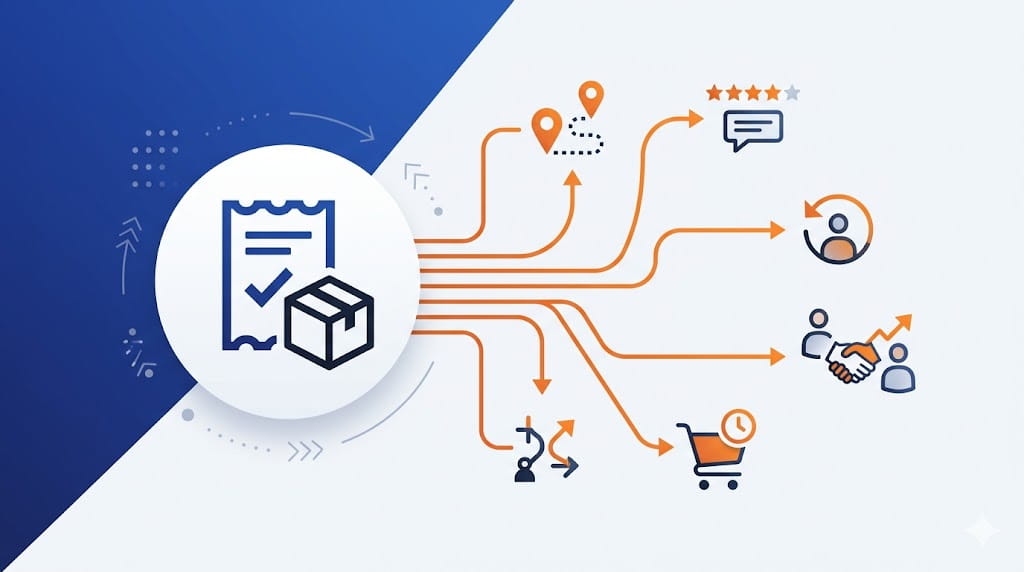
Summary: Post-purchase is the highest-intent, lowest-effort optimization surface on any e-commerce store-and yet it is the stage most teams neglect during their audits. This guide explores eight specific post-purchase moments that drive repeat purchase rates, reviews, and subscription conversions. By applying a rigorous CRO framework to the journey following the "Thank You" page, brands can drastically improve LTV without increasing their top-of-funnel acquisition costs.
Why post-purchase is under-audited
In the traditional CRO (Conversion Rate Optimization) hierarchy, the finish line is usually defined as the "Purchase" event. Once the credit card is processed and the revenue is recorded in GA4, the optimization team typically pivots back to the top of the funnel to find more "prospects." This "End-of-the-Tunnel" fallacy is a massive strategic oversight in 2026.
The reason post-purchase is consistently under-audited is largely organizational. Pre-purchase optimization is the domain of the Growth or Acquisition team. Post-purchase experience often falls into the "Customer Service" or "Operations" silo, where the primary KPI is "Ticket Reduction" rather than "Revenue Expansion." This disconnect results in a fragmented Analytics Architecture (AA) where the high-fidelity behavioral data from the first purchase is rarely used to orchestrate the second.
From a psychological perspective, the post-purchase phase is a goldmine of intent. The user has just demonstrated the ultimate form of trust: they gave you their money. Their "Dopamine Spike" is at its peak. However, this is also the moment of highest "Buyer's Remorse" and anxiety. By auditing these moments through an ECA (E-commerce Analysis) lens, we can identify where friction is destroying the relationship before it even starts. In an era where CAC is rising and retention is the only path to profitability, post-purchase CRO is not an optional add-on; it is the core of your unit economics.
Moment 1 - order confirmation offer
The "Thank You" page is the most under-utilized real estate in digital commerce. Most brands treat it as a receipt-a static confirmation that the transaction succeeded. However, our audits show that the "Thank You" page has a 100% open rate and represents the moment where the user is most focused on your brand.
The "In-the-Heat" Upsell: Instead of a generic "You might also like" section, a high-converting post-purchase CRO strategy utilizes "One-Click Upsells" that do not require the user to re-enter their payment details.
The Logic: "You just bought a coffee machine. Would you like to add a 12-month supply of filters for 20% off? We’ll add it to this shipment."
The Technical Edge: This requires your Analytics Engineering (AE) to be tightly integrated with your payment processor (like Stripe or Shop Pay) to allow for "Post-Auth" additions.
When implemented correctly, this "Moment 1" optimization routinely increases AOV (Average Order Value) by 5% to 15% with zero additional traffic cost. The key is to offer "Complementary Low-Friction" items that enhance the primary purchase, rather than random items that require a new decision-making cycle.
Moment 2 - shipment tracking page
The "Where is my order?" (WISMO) page is visited, on average, 3.4 times per transaction. If you are sending your users to a third-party courier page (like UPS or DHL), you are exporting your most engaged traffic to a utility-focused environment that you don't control.
Turning Utility into Marketing: In 2026, the gold standard is a "Branded Tracking Page" hosted on your own domain. This allows you to maintain the SST (Server-Side Tracking) link and continue the data collection journey.
Dynamic Content: Show a "How to Use" video for the specific product they are waiting for.
Predictive Cross-Sell: Based on their ECA profile, show them products that other "Early Adopters" of their SKU typically buy next.
Email/SMS Capture: If they arrived via a guest checkout, this is the perfect moment to offer an incentive to join the loyalty program in exchange for "Real-Time Delivery Alerts."
By auditing the "Tracking Page" as a marketing asset, you transform a period of "Anxiety" into a period of "Anticipation," reinforcing the brand value while the product is still in transit.
Moment 3 - delivery day prompt
The moment the package arrives at the user's door is the peak of the "Post-Purchase High." However, most automated flows trigger the "Review Request" or "Next Offer" based on the order date, not the delivery date. If a shipment is delayed and the user receives a "How do you like it?" email before the box arrives, you have created a negative friction point.
Active Activation: Your Analytics Architecture must be integrated with your 3PL (Third-Party Logistics) data. The "Delivery Confirmed" webhook should be the primary trigger for your post-purchase sequence.
The Prompt: An SMS that says "Your [Product] has arrived! Scan this QR code for the 60-second setup guide."
The Goal: Reduce the "Time to Value." If a user understands how to use the product immediately, they are 3x more likely to become a repeat purchaser.
Auditing this moment ensures that your marketing is "Context-Aware." It moves your post-purchase CRO from a "Batch and Blast" model to a "Real-World Response" model.
Moment 4 - review request timing
The biggest mistake in ECA audits regarding reviews is "Standardized Timing." Most stores ask for a review 7 days after purchase. But the "Utility Window" varies wildly by product. A user can review a t-shirt the day it arrives, but they need 21 to 30 days to know if a skin-care product or a supplement is actually working.
The Data-Driven Review Strategy:
Segment by Category: Use your Analytics Engineering models to assign a "Review Lag" to each product category.
The "Sentiment" Pre-Check: Before asking for a 5-star review on a public platform (like Trustpilot or Yotpo), send a "Quick Rating" email. If the user gives a 1-3, route them to customer support. If they give a 4-5, prompt them for the public review.
This pattern protects your brand's public reputation while ensuring you are capturing the "Peak Satisfaction" moment for each specific SKU. In 2026, social proof is the most effective CRO lever you have; timing the request is the only way to maximize its volume and quality.
Moment 5 - first repeat reminder
The transition from "One-Time Buyer" to "Repeat Customer" is the most difficult jump in the e-commerce lifecycle. For many brands, the "Repeat Purchase Funnel" is where the business actually becomes profitable.
The Replenishment Audit: Using your Cloud Data (CD) warehouse, you must calculate the "Mean Time Between Purchases" (MTBP) for your consumables. If the average user buys a 30-day supply every 38 days, your "Replenishment Reminder" should hit their inbox on Day 32.
The Pattern: "We noticed you're likely running low on [Product]. Click here to reorder in 10 seconds."
The Friction Fix: Use "Magic Links" that pre-fill their cart and address, requiring only a single biometric "Pay" action.
By auditing the "Gap" between usage and reorder, you can identify "Leaky Buckets" where customers are switching to competitors simply because you didn't remind them at the moment of need.
Moment 6 - subscription upgrade ask
For brands with a subscription option, the "First-Purchase to Subscription" conversion is the holy grail of post-purchase CRO. Many users are hesitant to subscribe on the first visit because they haven't tried the product yet.
The "Trial-to-Recurring" Pivot: Once the user has had the product for 14 days and has provided a positive "Sentiment" signal (see Moment 4), you should offer an "Upgrade to Subscription."
The Hook: "You've already seen the benefits of [Product]. Switch to a subscription now to save 15% on all future orders and get a free [Bonus Item]."
The Math: In your ECA dashboards, you should track the "Subscription Conversion Rate" of previous one-off buyers vs. first-time subscribers. Often, the "Second-Touch Subscription" has a 50% higher retention rate than the "First-Touch Subscription" because the user has already validated the product.
Moment 7 - referral program prompt
Referrals are the lowest-CPA customers you will ever acquire. However, most referral prompts are buried in the footer or a generic "Account" menu. The best time to ask for a referral is when the user has just expressed satisfaction.
The Dopamine-Linked Referral: The "Thank You" page of the second purchase is the ultimate referral moment. The user is now a "Verified Loyalist."
The Pattern: "You're one of our top customers. Give $20, Get $20. Who are three friends who would love [Brand]?"
The Social Loop: Provide a "Pre-Formatted" message for WhatsApp or Instagram DMs.
A high-performing Analytics Architecture (AA) will track these referral links back to the "Source Advocate," allowing you to build a "VIP Advocate" segment for exclusive early-access drops. This turns your customer base into your primary "Sales Force."
Moment 8 - winback trigger
The final moment in the post-purchase cycle is the "Silent Churn." This is when a customer who usually buys every 30 days has reached Day 60 without an interaction.
The Predictive Winback: Instead of a generic "We miss you" email at 90 days, use Analytics Engineering (AE) to identify "Deviation from Norm." If a user's behavior deviates by 2 standard deviations from their personal MTBP, trigger a "High-Value Winback" offer.
The Offer: This is the only moment where "Deep Discounting" is justified. The goal is to "Save the LTV," not to "Protect the Margin" of a single transaction.
The Feedback Loop: If the winback fails, trigger a 1-question survey: "Why did you stop buying?" This "Zero-Party Data" is more valuable for your CRO roadmap than any heatmap.
Final thoughts
The e-commerce race is no longer won by the brand with the loudest ads; it is won by the brand that keeps its customers the longest. Post-purchase CRO is the process of engineering that longevity.
By systematically auditing these eight lifecycle moments-from the "Thank You" page to the "Winback Trigger"-you move beyond the "Transactional" mindset and into the "Relationship" mindset. You turn your Analytics Architecture (AA) from a rearview mirror into a predictive engine.
In 2026, your most valuable data isn't who is visiting your site; it's what your customers are doing after they leave. Reclaim the post-purchase journey, optimize the "Silent Moments," and build a business that grows on the foundation of its own success.
Topics: LTV optimization, e-commerce growth, subscription conversion, CRO, replenishment logic, customer retention, ECA, referral marketing, post-purchase CRO, Analytics Architecture
More articles on the Samarth Analytics blog · Markdown version of this article