Heatmaps and Session Replays: What Actually Reveals the Problem (and What’s Noise)
By Samarth Analytics · Published · Updated · CRO Audits · 13 min read
Summary: A practical CRO framework for interpreting heatmaps and session replays without falling into false conclusions. This guide explains why heatmaps alone are misleading, how to triangulate behavioral data with funnels and replays, how to identify meaningful rage clicks, and how to segment recordings by user intent while maintaining privacy compliance.
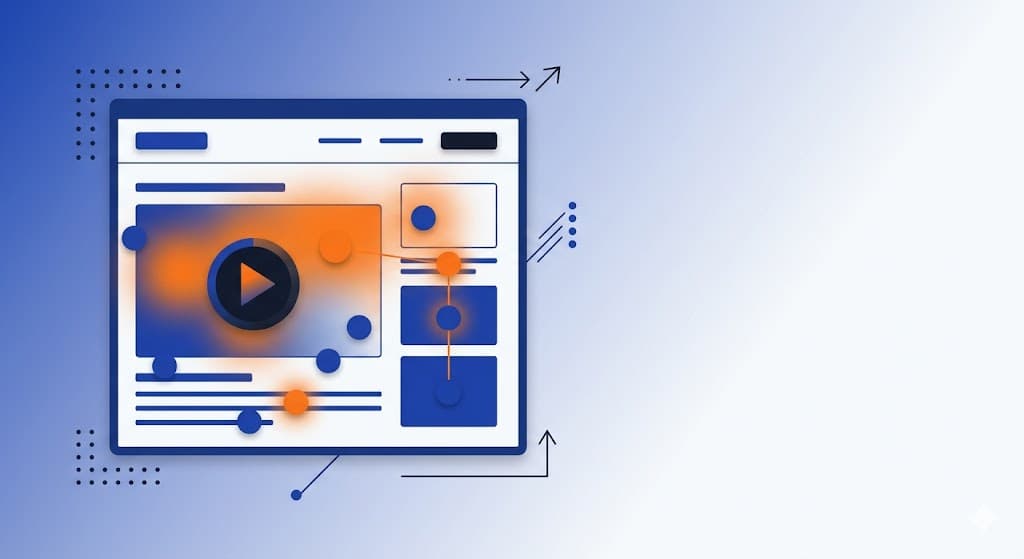
WHY HEATMAPS ALONE MISLEAD
Heatmaps are one of the most visually compelling tools in conversion rate optimization, but they are also one of the easiest to misinterpret.
At first glance, they appear to show exactly what users are doing: where they click, how far they scroll, and what they ignore. The problem is that heatmaps aggregate behavior without context.
This creates three major distortions:
High traffic areas appear more important than they actually are Low interaction elements may still be critical conversion drivers Aggregated data hides intent differences between users
For example, a button might appear “ignored” in a heatmap simply because most users never reach that section of the page, not because the button is ineffective.
Heatmaps show what happened, but not why it happened. That gap is where incorrect CRO decisions are made.
THE THREE TRIANGULATION INPUTS
To make reliable CRO decisions, heatmaps should never be used in isolation. They must be triangulated with two additional data sources.
The three inputs are:
- Heatmaps (quantitative behavior distribution)
Click maps Scroll depth maps Attention maps
- Session replays (qualitative behavioral context)
Real user interaction flows Friction points and hesitation signals Navigation patterns across pages
- Funnel analytics (conversion structure data)
Step-by-step drop-off rates Conversion progression metrics Device and channel segmentation
When all three are combined, you move from “what users did” to “what users experienced and why they dropped off.”
The key principle:
No CRO insight is valid unless it appears in at least two of the three data sources.
SPOTTING RAGE CLICKS THAT MATTER
Rage clicks are often treated as a universal UX problem, but not all rage clicks are meaningful.
A rage click is only actionable when it appears in a conversion-critical context.
Types of rage clicks:
- Meaningful rage clicks
Repeated clicks on non-functional buttons Clicks on elements that look interactive but are not Friction during checkout or form submission Mobile UI misalignment causing repeated taps
These indicate genuine usability issues.
- Noise rage clicks
Accidental mobile taps Rapid scrolling misinterpreted as clicks Non-conversion pages (blog content, informational pages) Users exploring intentionally without intent to convert
The mistake most teams make is treating all rage clicks as equal. In reality, only rage clicks tied to high-intent journeys should influence CRO decisions.
REPLAYS WORTH WATCHING VS SKIPPING
Session replay tools generate large volumes of data, but not all recordings are equally valuable.
Watching everything leads to analysis paralysis. The goal is selective review.
Replays worth watching:
Sessions that reached checkout but did not convert High-intent traffic (paid search, branded campaigns) Users who abandoned at form or payment steps Sessions with multiple friction signals (hesitation, backtracking, rage clicks)
Replays to skip:
Low-duration bounce sessions under a few seconds Irrelevant traffic (bot-like behavior, accidental clicks) Informational blog browsing with no conversion path Highly repetitive sessions with no behavioral variance
Effective CRO analysis focuses on failure points in the funnel, not general browsing behavior.
SEGMENTING RECORDINGS BY INTENT
The biggest improvement in session replay analysis comes from segmentation by user intent rather than viewing all users as a single group.
Key segmentation dimensions include:
Traffic source (paid, organic, direct, referral) Device type (mobile vs desktop behavior differences) Funnel stage (awareness, consideration, conversion) Returning vs new users High-value vs low-value customers
Intent segmentation allows you to identify patterns that are otherwise invisible in aggregated data.
For example:
Mobile users may struggle with checkout UI Paid traffic may abandon earlier due to mismatched landing pages Returning users may skip steps entirely due to familiarity
Without segmentation, all behavioral signals get averaged out and lose meaning.
AVOIDING PRIVACY PITFALLS
Heatmaps and session replay tools operate in a sensitive area of user behavior tracking, which makes privacy compliance critical.
Common risks include:
Recording sensitive form inputs (emails, payment data) Capturing personal identifiers in session replays Violating consent regulations (GDPR, ePrivacy, etc.) Storing data without proper anonymization
Best practices:
Mask all input fields by default Exclude payment and authentication pages from recording Ensure consent mode integration before tracking begins Apply IP and identity anonymization where required Maintain clear data retention policies
Privacy-safe analytics is not optional-it is a requirement for sustainable CRO programs.
FINAL THOUGHTS
Heatmaps and session replays are powerful tools, but only when interpreted within a structured analytical framework. On their own, they often create misleading conclusions based on visual patterns rather than actual conversion impact.
The most reliable CRO insights come from triangulating heatmaps with session replays and funnel data, then filtering results through intent-based segmentation. When combined with disciplined privacy practices, this approach turns behavioral analytics from a reactive observation tool into a structured conversion optimization system.
Topics: heatmap session replay, rage clicks, CRO analysis, conversion optimization, funnel analysis, user behavior analytics, session recordings, UX optimization
More articles on the Samarth Analytics blog · Markdown version of this article