Variable Naming Conventions That Survive Team Turnover
By Samarth Analytics · Published · Updated · Tag Management · 11 min read
Summary: A practical GTM governance guide focused on building variable naming conventions that remain consistent across teams, agencies, and time. This article introduces a structured naming model, DataLayer alignment principles, and deprecation strategies to prevent container chaos and ensure long-term maintainability in enterprise-scale implementations.
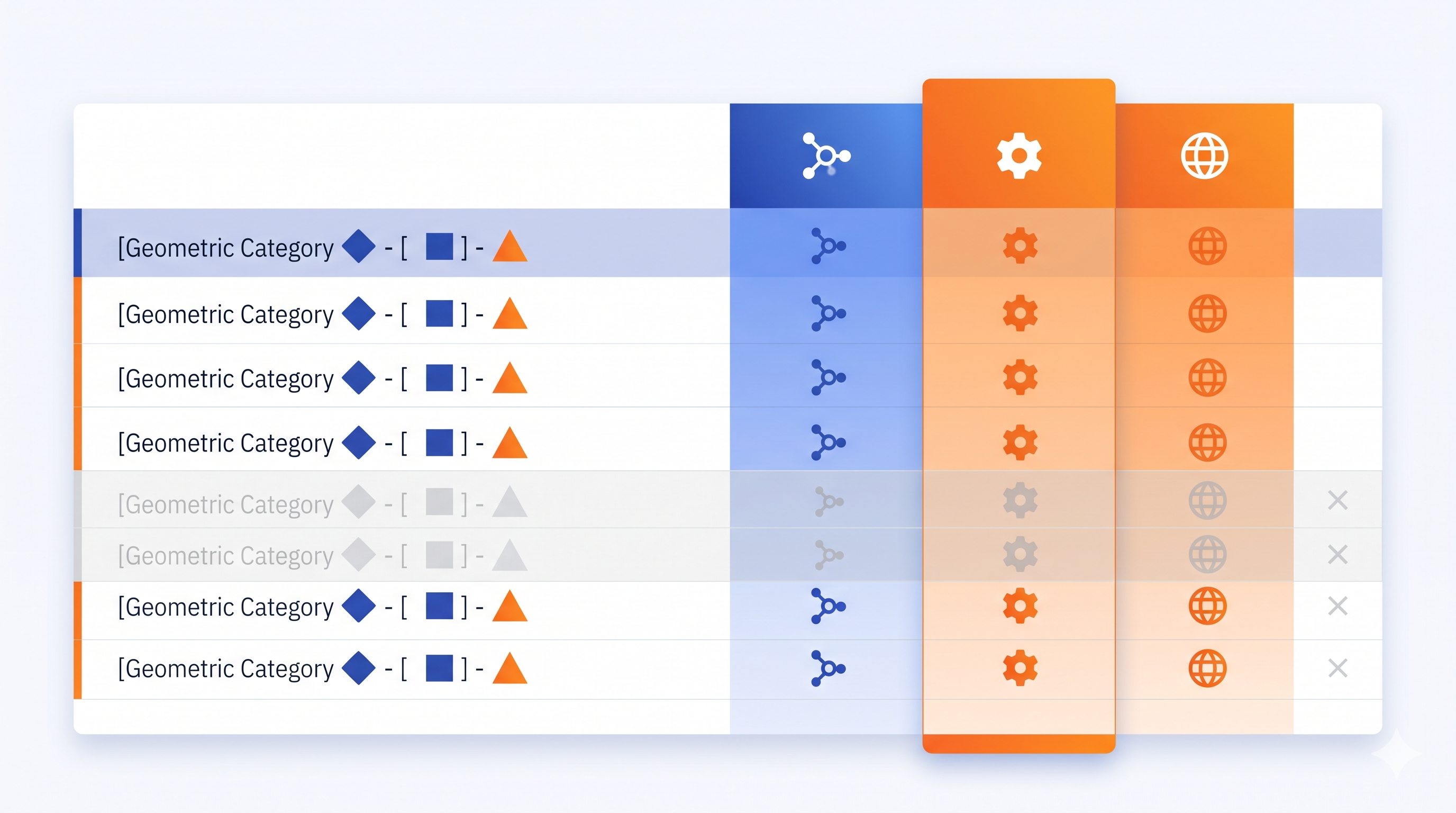
WHY GTM VARIABLES GO BAD FIRST
In most Google Tag Manager containers, variables degrade faster than tags or triggers.
The reason is simple: variables are the most frequently created and least governed part of the system.
Common failure patterns include:
Multiple naming styles across contributors Duplicate variables serving identical purposes Unclear ownership of computed logic Legacy variables left unused but still active
Over time, this creates a “shadow layer” of variables that no one fully understands but everyone depends on.
The result is fragile tracking logic and high debugging overhead.
THE THREE-PART NAMING MODEL - SOURCE, PURPOSE, SCOPE
A scalable GTM naming system must encode meaning directly into variable names.
A structured model includes three components:
- Source
Where the data originates:
dataLayer DOM cookie url custom
- Purpose
What the variable is used for:
user_id transaction_value page_type campaign_source
- Scope
Where and how it applies:
session user event page
Example structure:
dataLayer_user_id_event url_campaign_source_session
Why this works:
It removes ambiguity and makes variable intent readable without opening configuration panels.
CONSTANTS VS COMPUTED VARIABLES
A key distinction in scalable GTM architecture is separating constants from computed values.
Constants
Static values reused across tags Examples: container IDs, fixed thresholds, default values Should rarely change
Computed variables
Derived from logic or conditions Examples: revenue calculations, conditional flags, dynamic categorization
Best practice:
Keep constants centralized and reusable Avoid embedding logic inside multiple computed variables Document computation rules explicitly
Why this matters:
Mixing constants and computed logic leads to inconsistent behavior across tags and environments.
DATA LAYER CONVENTIONS THAT MAP CLEANLY TO GTM
The dataLayer is the foundation of reliable GTM architecture, but only when structured correctly.
Key principles:
- Flat and predictable structure
Avoid deeply nested objects Ensure consistent key naming
- Event-first design
Each interaction should emit a clear event name Event names should map directly to business actions
- Stable key naming
Avoid dynamic or context-dependent keys Use standardized field names across events
Example:
event: "add_to_cart" product_id: "12345" value: 49.99
Why this matters:
Clean dataLayer design reduces the need for complex GTM variable transformations.
DEPRECATION AND SUNSET PATTERNS
One of the most overlooked aspects of GTM governance is variable lifecycle management.
Without formal deprecation rules, containers accumulate redundant logic.
Recommended patterns:
Mark deprecated variables explicitly in naming (e.g. _deprecated suffix) Maintain a sunset log in documentation Remove variables only after dependent tags are confirmed inactive
Common mistake:
Deleting variables without tracing dependencies, causing silent tracking failures.
A controlled deprecation process ensures system stability over time.
A VARIABLE REGISTRY SPREADSHEET TO PIN IN YOUR WIKI
A variable registry acts as the single source of truth for GTM configuration.
Recommended structure:
Variable name Type (constant, computed, dataLayer, DOM) Description Dependencies (tags/triggers using it) Owner Status (active, deprecated, retired)
Benefits:
Improves onboarding speed for new team members Reduces duplication Enables safe refactoring
This registry becomes essential in enterprise environments where multiple teams modify the same container.
ROLLING OUT THE CONVENTION WITHOUT REWRITING EVERYTHING
One of the biggest risks in governance changes is attempting full rewrites.
A better approach is incremental adoption:
Phase 1: Standardize new variables only
Apply naming rules to all new implementations Do not modify legacy variables yet
Phase 2: Gradual migration
Refactor variables when they are actively edited Consolidate duplicates during audits
Phase 3: Cleanup cycles
Remove deprecated variables quarterly Align naming across major releases
Why this works:
It avoids breaking existing tracking while steadily improving structure over time.
FINAL THOUGHTS
GTM variable naming conventions are not just documentation-they are infrastructure.
A structured naming model, combined with disciplined lifecycle management and dataLayer consistency, prevents container decay and reduces long-term operational risk.
When naming is treated as a system rather than an afterthought, GTM becomes significantly more scalable, maintainable, and resilient to team turnover.
Topics: GTM documentation, dataLayer structure, tag management best practices, analytics engineering, tracking architecture, GTM variable naming, Google Tag Manager governance
More articles on the Samarth Analytics blog · Markdown version of this article