The CRO Audit Framework We Use for Shopify Stores
By Samarth Analytics · Published · Updated · CRO Audits · 11 min read
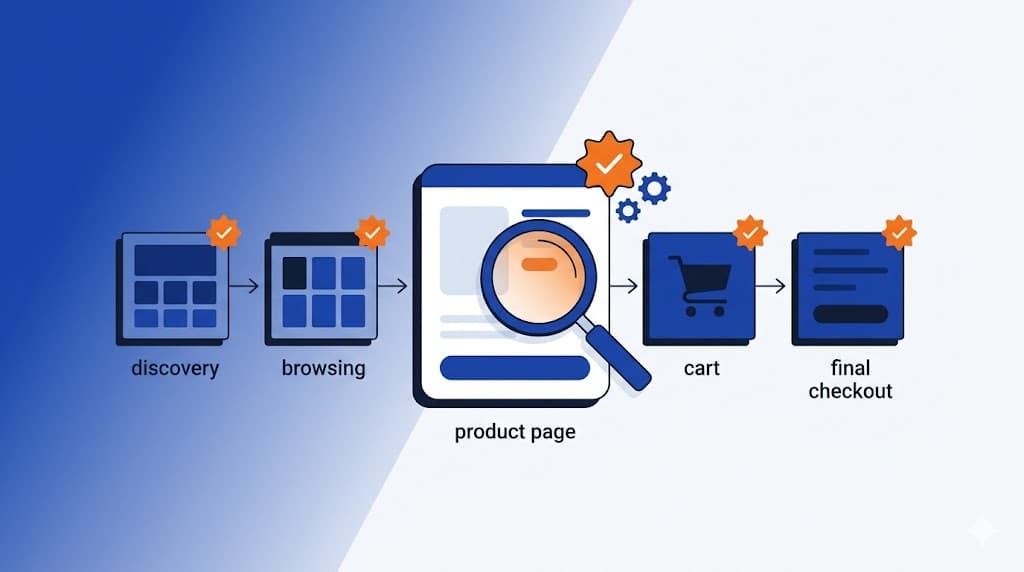
Summary: A practical Shopify CRO audit framework designed to identify revenue leaks across the full funnel. This guide covers homepage navigation, product detail pages, cart and checkout optimization, post-purchase retention, and a structured ICE-based prioritization system backed by 60+ audit checkpoints.
WHY SHOPIFY NEEDS A PLATFORM-SPECIFIC AUDIT
A Shopify CRO audit cannot be treated like a generic eCommerce evaluation. Shopify has a structured ecosystem where themes, apps, and checkout constraints directly influence how users interact with a store.
Unlike fully custom platforms, Shopify limits backend flexibility but provides strong frontend optimization opportunities. This means most conversion gains come from improving user experience, messaging clarity, and funnel flow rather than rebuilding infrastructure.
A Shopify-specific audit is important because:
Theme architecture restricts layout control Checkout customization varies by plan and setup App integrations can introduce performance overhead Default templates often prioritize aesthetics over conversion logic
The purpose of this audit is to identify friction points within these constraints and improve revenue performance without disrupting the core system.
HOMEPAGE AND NAVIGATION CHECKPOINTS
The homepage is the entry point of user intent. If it fails to communicate value quickly, users drop off before reaching product pages.
Key audit checkpoints include:
Clear value proposition above the fold Strong visual hierarchy guiding attention Visible primary call-to-action Simple navigation structure (no more than 6–7 categories) Functional and visible search bar Mobile navigation usability and accessibility
Common issues include cluttered layouts, competing CTAs, and unclear messaging hierarchy. A high-performing Shopify homepage should guide users toward products in under 5 seconds of engagement.
Navigation should act as a decision shortcut rather than a content map.
PDP ELEMENTS THAT MOVE REVENUE
The product detail page (PDP) is the most important conversion asset in any Shopify store.
Audit focus areas include:
Clear product titles with benefit-driven framing High-quality images with multiple use-case angles Strong above-the-fold CTA placement Transparent pricing and discount visibility Trust signals such as reviews and ratings Shipping, delivery, and return clarity Mobile-first design consistency
Advanced PDP optimization includes:
Sticky add-to-cart functionality on mobile Variant selector simplicity Scroll-based engagement tracking Smart cross-sell placement
A strong PDP reduces hesitation by answering objections before the user even thinks about them.
CART + CHECKOUT FUNNEL SCORING
Cart and checkout represent the final conversion barrier. Even minor friction here can lead to significant revenue loss.
Cart audit elements:
Visibility of total cost before checkout Shipping cost transparency Easy quantity updates and product edits Minimal distractions or exit paths Trust signals near checkout button
Checkout audit elements:
Guest checkout availability Minimal form fields Autofill and address optimization Multiple payment methods (cards, wallets, BNPL) Clear error messaging Mobile optimization
Each issue is scored based on funnel friction:
Low friction: smooth progression Medium friction: minor hesitation High friction: abandonment trigger
This scoring helps identify where users are dropping off and why.
POST-PURCHASE AND RETENTION
Post-purchase optimization is often overlooked but critical for long-term revenue growth.
Key audit areas:
Clear order confirmation messaging Post-purchase upsell or cross-sell opportunities Email and SMS onboarding flows Shipping updates and communication consistency Easy access to support and return policies
Additional retention strategies:
Loyalty program integration Subscription prompts where relevant Re-engagement campaigns for repeat purchases
The thank-you page is not the end of the funnel. It is a high-intent engagement opportunity that directly impacts customer lifetime value.
PRIORITIZING FINDINGS WITH ICE
A CRO audit is only valuable when findings are prioritized correctly. The ICE framework ensures focus on revenue-impacting changes first.
ICE stands for:
Impact – potential revenue or conversion improvement Confidence – certainty of expected result Ease – effort required to implement
Each finding is scored from 1 to 10, and combined into a prioritization score.
Example prioritization:
High-impact CTA improvement on PDP Medium confidence based on behavioral data Easy implementation via theme adjustment
This would rank higher than complex redesigns with uncertain outcomes.
Findings are typically grouped into:
Quick wins (high ICE score) Strategic improvements (medium ICE score) Long-term experiments (low ICE score)
This ensures teams focus on revenue-first optimization.
FINAL THOUGHTS
A Shopify CRO audit is not a design review exercise. It is a structured system for identifying friction across the entire customer journey and improving revenue performance through prioritization.
The most effective Shopify stores treat CRO as an ongoing process rather than a one-time project. By consistently auditing homepage clarity, PDP performance, checkout efficiency, and retention systems, businesses can create compounding conversion gains over time.
Topics: Shopify optimization, PDP optimization, conversion rate optimization, eCommerce CRO, Shopify CRO audit, funnel analysis, checkout optimization
More articles on the Samarth Analytics blog · Markdown version of this article