Attribution Windows That Actually Match Your Sales Cycle
By Samarth Analytics · Published · Updated · Conversion Tracking · 8 min read
Summary: A technical and strategic framework for departing from generic e-commerce attribution defaults. This guide provides a methodology for measuring your actual "Time to Conversion," navigating the hard constraints of modern advertising platforms, and reconciling the inevitable data mismatches that occur when mapping a multi-month buyer journey across fragmented digital touchpoints.
Why defaults don't fit B2B or considered-purchase
In the world of Conversion Tracking (CT), the "last-click" 7-day or 30-day attribution window is the legacy of early 2010s impulse-buy e-commerce. For a $30 t-shirt, a 7-day window is sufficient; the distance between the stimulus (an Instagram ad) and the response (a purchase) is measured in hours or days. However, for B2B software, high-ticket electronics, or professional services, these defaults are not just inaccurate-they are actively deceptive.
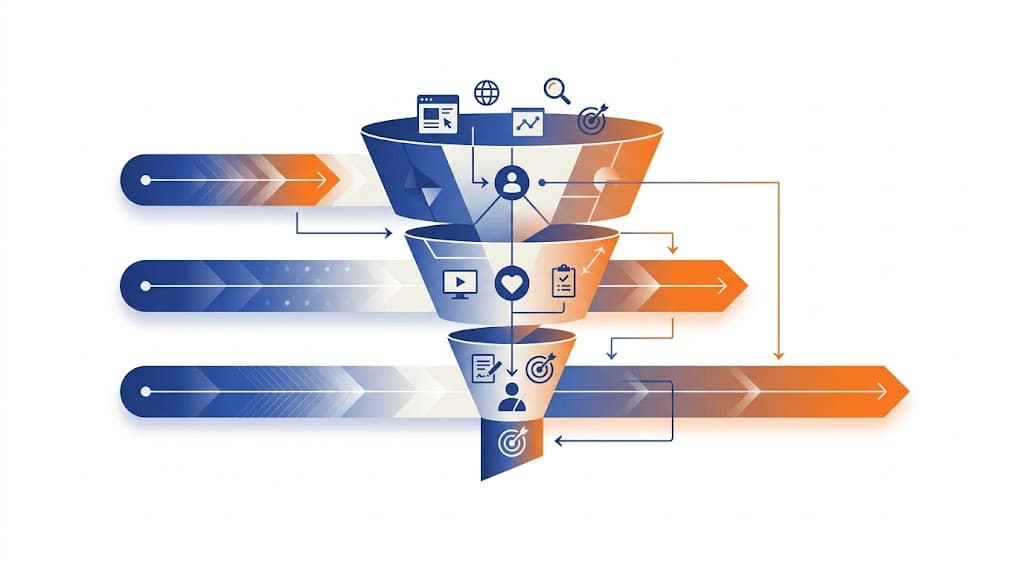
When your sales cycle spans 90 days or more, a short attribution window effectively "blinds" your marketing team. In a considered-purchase environment, the first touchpoint is often educational. A prospect might download a whitepaper in January, attend a webinar in February, and finally book a demo in April. If your attribution window is set to the standard 30 days, the initial high-intent search click or the nurturing social ad from January is completely erased from the record.
By the time the conversion happens in April, the platform attributes the success to "Direct" traffic or the "Brand Search" campaign that captured the final navigational intent. This creates a "Self-Fulfilling Prophecy" of budget misallocation: you stop funding the "Top of Funnel" awareness campaigns because they "don't convert," not realizing that they were the primary drivers of the interest that eventually converted months later. In 2026, Analytics Architecture (AA) must be designed to respect the physics of the human decision-making process, rather than the arbitrary technical limits of a browser cookie.
Measuring your actual cycle
Before you can set a custom attribution window, you must move from "guessing" your sales cycle to "measuring" it. The most common error in Cloud Data (CD) strategy is assuming that the time between a "Lead" and a "Sale" is the total sales cycle. In reality, you must measure the time between the very first touchpoint and the final conversion.
To achieve this in GA4, you should utilize the "Path exploration" and the "User purchase journey" reports, but the most reliable method is a custom SQL analysis in BigQuery. By looking at the user_pseudo_id or a hashed user_id, you can calculate the MIN(event_timestamp) for the first marketing interaction and the MIN(event_timestamp) for the successful conversion.
A standard measurement framework should include:
The Lead Generation Cycle: Time from first ad click to form submission.
The Sales Velocity: Time from form submission to "Closed Won" status in the CRM.
The Total Conversion Lag: The sum of both, representing the true "Lookback" requirement.
If your data shows that 80% of your revenue comes from users whose first touchpoint was 45 days prior, but your attribution window is set to 30 days, you are under-reporting your marketing effectiveness by a significant margin. Your goal is to set a window that captures at least 90% of the conversion lag identified in your Analytics Engineering (AE) audit.
Platform-specific window constraints
Once you know your ideal window, you must reconcile it with the hard technical constraints of modern advertising platforms. In 2026, privacy-first browser changes have forced platforms to truncate their windows, making the "Perfect Attribution" even harder to achieve.
Meta Ads (Facebook/Instagram): Meta has moved toward a 7-day click and 1-day view model as the standard. While they offer a 28-day click window for some accounts, it is increasingly "modeled" rather than "observed" due to ITP (Intelligent Tracking Prevention) and Apple’s App Tracking Transparency (ATT). For B2B marketers, this is a major constraint; you must use Meta's Conversion API (CAPI) to send backend CRM signals back to the platform to "stretch" the attribution as much as possible.
Google Ads: Google remains the most flexible, allowing for attribution windows up to 90 days. For considered-purchase brands, we almost always recommend moving from the default 30-day window to the maximum 90-day window for search campaigns. This allows Google's "Data-Driven Attribution" (DDA) to assign fractional credit to those early, non-brand keywords that started the journey.
LinkedIn Ads: LinkedIn typically allows for a 30-day click and 7-day view window. Given the high cost-per-click (CPC) on LinkedIn, it is vital to use the full window to justify the investment. LinkedIn’s integration with CRM systems (via "Offline Conversions") is the most effective way to ensure that a conversion happening in Month 3 is still linked back to the original ad click.
View-through inclusion decisions
The debate over "View-Through Conversions" (VTCs)-where a user sees an ad but doesn't click, yet later converts-is one of the most contentious topics in Conversion Tracking (CT). For many "Performance" teams, VTCs are viewed as "fluff" that platforms use to inflate their numbers. However, for "Considered Purchase" brands, they are often a legitimate signal of brand awareness.
The decision to include VTCs in your reporting should be based on Incrementality Testing.
The "Noise" Problem: If you are a massive brand like Coca-Cola, millions of people see your ads every day. If you count every sale that happens after an ad view, you are simply counting the people who were going to buy anyway.
The "Nurture" Value: For a niche B2B software, a view of a high-quality video ad on LinkedIn might be the "nudge" that keeps your brand top-of-mind during a long evaluation period.
In 2026, we recommend a "Tiered View-Through" approach. Set a very short VTC window (e.g., 1 day) for high-frequency channels like Meta, but consider a longer window (e.g., 7 days) for high-impact video or display placements. The key is to never mix "Click-Through" and "View-Through" data in a single "Total Conversions" metric without a clear visual distinction on your Custom Dashboards.
Mismatch patterns across platforms
If you set your Google Ads window to 90 days and your Meta Ads window to 7 days, your GA4 reports will become an "Attribution Nightmare." You will see massive mismatch patterns that can lead to incorrect strategic decisions.
Common mismatch patterns include:
The "Direct" Spike: When Meta's 7-day window expires but the user buys on Day 10, Meta reports zero conversions, while GA4 (using its own 30-day default) attributes the sale to "Direct." This makes Social look like a failure and "Direct" look like a miracle.
Double-Counting: If a user clicks a Google Ad on Monday and a Meta Ad on Wednesday, then buys on Friday, both platforms will claim 100% credit for the sale if their windows are overlapping.
The "Last-Click" Bias: In a multi-channel environment, the platform with the most "navigational" intent (usually Google Search) will always capture the credit in GA4, even if Meta did 90% of the work in the first 60 days of the cycle.
To solve this, you must implement a "Unified Attribution Model" in your Cloud Data (CD) warehouse. By pulling the raw click data from all platforms into BigQuery, you can apply a single, consistent attribution window (e.g., 60 days) to all touchpoints, regardless of what the individual ad platforms report. This is the only way to see a "True North" view of your marketing mix.
Reporting adjustments when windows change
Changing your attribution window is a "breaking change." If you move from a 30-day window to a 90-day window on January 1st, your January reports will look significantly better than your December reports, even if your actual performance didn't change. You are simply "looking back" further and catching more data.
When making these adjustments, you must follow a "Governance Protocol":
Historical Restatement: Use your Analytics Engineering (AE) tools to re-calculate at least 12 months of historical data using the new window. This ensures that your Year-over-Year (YoY) comparisons remain valid.
Stakeholder Education: Communicate to the executive team that the "Growth" seen in the first month after the change is a technical adjustment, not a marketing win.
Platform Re-learning: Be aware that changing the attribution window inside an ad platform (like Google Ads) will trigger a "Re-learning" phase for the bidding algorithm. Do not change windows during a peak sales period or a major campaign launch.
Proper reporting is not just about showing the highest numbers; it’s about showing the most truthful numbers. An attribution window that matches your sales cycle allows you to speak the language of the business, rather than the language of a platform's default settings.
Final Thoughts
In 2026, the "One-Size-Fits-All" approach to attribution is a recipe for stagnation. If your sales cycle takes 100 days, but your measurement window closes at 30 days, you are essentially firing 70% of your marketing effectiveness data.
Setting attribution windows that actually match your sales cycle is an act of data sovereignty. It requires a deep dive into your Cloud Data (CD), a healthy skepticism of platform defaults, and a commitment to long-term Analytics Architecture (AA) over short-term "hacks." When your measurement reflects the reality of your customer's journey, you stop managing pixels and start managing growth.
Topics: CT, attribution window, B2B analytics, sales cycle optimization, BigQuery analysis, CD, conversion lag, GA4 strategy, Analytics Architecture, marketing attribution
More articles on the Samarth Analytics blog · Markdown version of this article